

Understanding AI Solutions in Healthcare
With AI solutions bubbling up all over healthcare, there’s a whole lot to keep track of. But no worries—here’s a little pocket guide on the nuts and bolts of this tech marvel and its must-have status in the health scene.
Introduction to AI Solutions
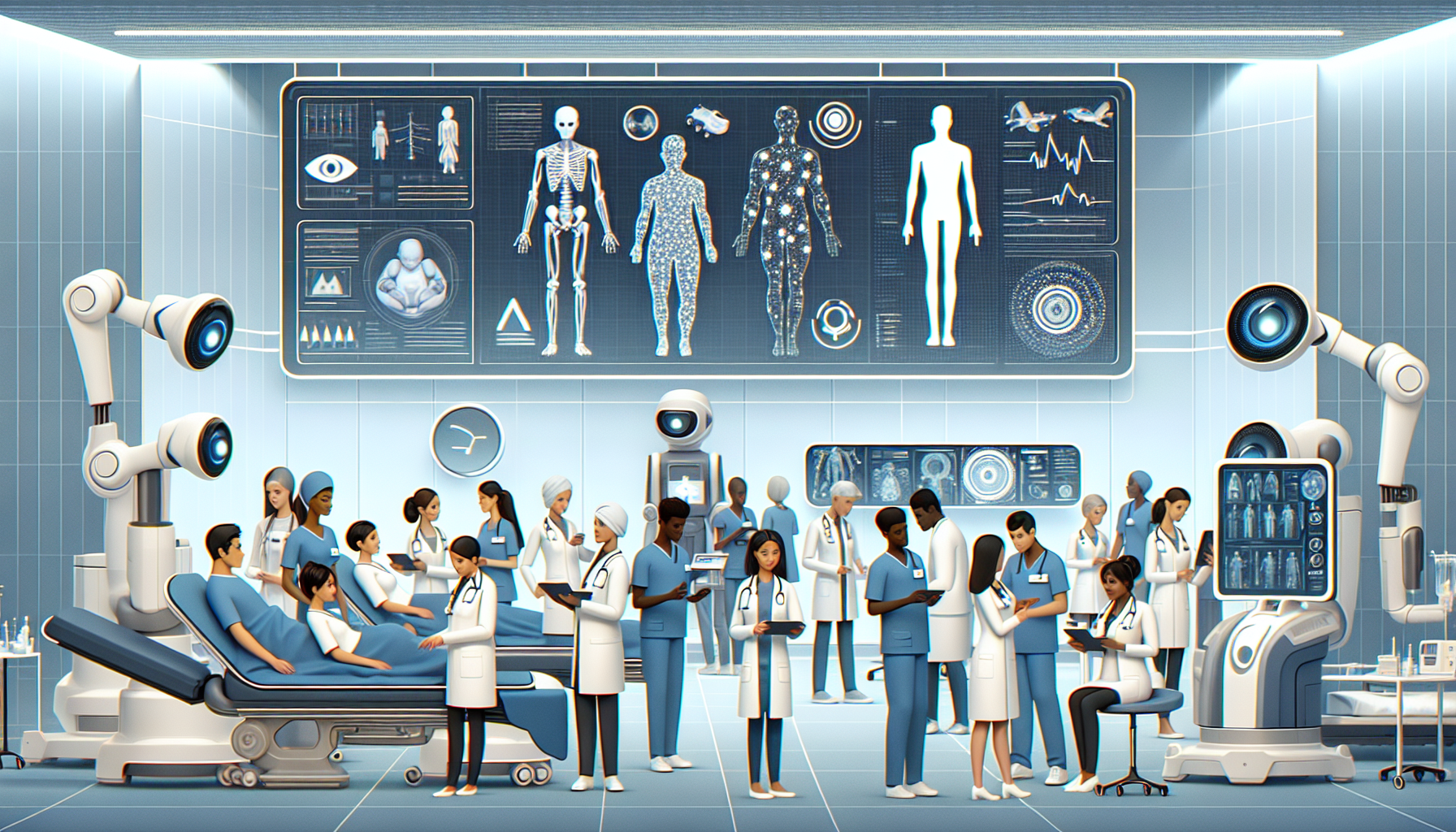
AI is stirring the healthcare soup by jazzing up how docs deal with patients and mountains of data (PMC). From scanning body images to rummaging through electronic records, handling lab tests, tweaking treatments, and dreaming up new drugs, AI’s got it covered. By calling on AI’s superpowers, hospitals and clinics can work smoother, see clearer, and step up patient care.
Medical images? AI’s all over it—spotting stuff like breast cancer on mammograms and pneumonia on chest scans better than your average doc (BMC Medical Education). With its eagle-eye accuracy, AI catches problems early, so folks get the right help sooner.
Importance of AI in Healthcare
AI is more than just a fancy toy for diagnostics—it’s shaking up admin tasks, smoothing clinical workflows, and giving patient care a major boost. Using natural language processing, AI takes over routine jobs like jotting down patient notes. That means doctors get more face-time with patients instead of wrestling with paperwork.
Predictive analytics, powered by AI, is making waves too. It’s pinpointing folks at higher risk, forecasting hospital comebacks, and giving patient care a serious upgrade (BMC Medical Education). These smarty-pants models improve patient outcomes and feed into snazzy new tools that healthcare folks can’t get enough of.
In short, AI is helping healthcare crunch data faster, tailor-fit treatments, and steer towards better patient outcomes. AI systems gobble up data and spit out insights that push medical advances to the frontlines. And as AI tech keeps growing, it’s geared up to flip the healthcare script, shining a light on precision medicine and smart decision-making all for the sake of healthier lives.
Implementation of AI in Healthcare
When folks explore AI solutions for healthcare, it’s good to grasp how AI is shaking things up in medicine. Peek into some challenges of bringing AI onboard, and check out real stories showing how it really works.
AI Applications in Healthcare
AI’s really stirring the pot in healthcare, offering snazzy ways to boost patient care, make medical processes run smoothly, and nail those tricky diagnoses. Here’s what AI is up to in healthcare:
- Checking out medical images to catch diseases early.
- Using data magic to craft personalized treatment plans.
- Helping out in drug discovery with computer simulations.
- Acting as virtual health buddies to keep patients in the loop.
- Smoothing out healthcare processes to get things done faster.
These AI tricks are leaving a mark, making both doctors and patients happier campers.
Overcoming Challenges in AI Adoption
Even though AI sounds like a healthcare superhero, there’s some slog ahead before it really settles in. Data privacy, fitting into old systems, red tape, and getting people used to new tech are some bumps along the way. Tackling these issues means coming up with smart fixes that cover tech bits, ethical stuff, and operational mojo to roll AI into healthcare like a pro.
Case Studies in AI Implementation
Real cases show how AI’s got the goods, leading to snappy patient outcomes and making hospital operations slicker:
- University of Alabama at Birmingham Medicine:
- Teamed up with Sickbay’s AI tech from Medical Informatics to buff up data gathering and sync, allowing for primo patient care. (VKTR)
- Healthfirst:
- Hitched with ClosedLoop for auto tasks in data cleaning, organizing, and model training, keeping up with what healthcare providers need. (VKTR)
- OSF Healthcare and Fabric:
- Tweaked Fabric’s Digital Front Door software to roll out Clare the AI care navigator, giving patients a smoother ride and cutting costs. (VKTR)
- Valley Medical Center:
- Used Xsolis’ Dragonfly platform with AI-power to boost observation rates and tailor care decisions just when they’re needed. (VKTR)
- University of Rochester Medical Center:
- Passed out Butterfly IQ probes, making hospital imaging access a breeze and dialing up diagnostic accuracy and speed with AI savvy. (VKTR)
If healthcare pros want to see how AI really shakes out, these stories spell out clear benefits. They’ll pick up insights on how AI steps up healthcare and makes it all tick better for patients and practitioners alike.
Benefits of AI in Healthcare
AI is shaking up healthcare like a snowglobe, enhancing patient outcomes and making hospitals run smoother than ever. Let’s dig into how AI technology is stepping up to the plate in healthcare, making things better all around.
AI Advantages for Patients
Using AI in healthcare is like having a super-smart assistant that’s got your back. It can analyze a mountain of medical data faster than you can say “scalpel,” helping doctors get to the bottom of things quicker. This means patients get diagnosed and treated pronto, which can make a world of difference.
AI isn’t just speedy; it’s also personal. It helps doctors tailor treatments based on your whole medical story, minimizing those pesky side effects and amping up what works. Think of it like the difference between a generic T-shirt and something that perfectly fits you.
Even before things go sideways, AI is on the job. It’s like having a crystal ball that checks your health info to spot risks early, giving doctors a chance to step in before diseases get a foothold. Better health outcomes, here we come!
Got more curiosity than a cat? Check our piece on ai solutions for business for a broader view.
Enhancing Healthcare Delivery
AI isn’t just about making patients’ lives better; it’s all about making healthcare work like a well-oiled machine. This tech helps strip away inefficiencies, automates boring tasks, and gets the boring paperwork out of the way so healthcare pros can do what they’re best at—caring for you.
Ever been stuck waiting forever in a hospital? AI to the rescue! It tweaks schedules, monitors stuff in real-time, and generally makes your whole hospital trip less like a marathon and more like a brisk jog.
And with remote patient monitoring, AI’s like having a friendly robot sidekick keeping an eye on your vitals with wearable gadgets. This means doctors can keep tabs on you from afar and jump in when help is needed.
Craving more AI magic in different industries? Check out our articles on ai solutions for different sectors.
As the healthcare field continues to morph, AI’s role is just getting bigger. By using AI smarts, healthcare can give patients more personal care, better results, and make the whole experience better for everyone involved.
Ethical Considerations in AI for Healthcare
AI is shaking up the doodads and contraptions of the healthcare sector, and with this high-tech wizardry come some important talking points about ethics. Two biggies in this realm: keeping privacy and data safe, and tackling the prickly issue of algorithmic bias.
Privacy and Data Security
AI loves munching on data, which means heaps of private stuff—think patient records and medical histories—all turning into 1s and 0s. It’s a balancing act keeping these details under wraps while still putting them to good use. Trust is the foundation here, so when crunching numbers, airtight protection is key. This means solid encryption and tight access controls, keeping everyone’s medical secrets from prying eyes. Everyone from doctors to the folks behind the code needs to be on their A-game to ensure that patient conversations stay off the gossip circuits and that the data isn’t leaking all over the place.
Addressing Algorithmic Bias
Then there’s the tricksy matter of bias. AI can pick up on more than it should—like a mischievous parrot learning the wrong phrases—when dealing with bits from varied groups. If an AI system’s training data is skewed, it could misdiagnose or provide treatment that’s off-kilter for certain groups. That’s like giving chocolate to a dog; no bueno. To keep it from issuing unfair verdicts, there should be routine checkups on these algorithms, ensuring they’re drawing from a rich tapestry of data and not just a single spool of thread. This ensures that whether it’s Joe from next door or Maria across town, everyone gets the fair shake they deserve.
By squaring up to these challenges—privacy, data fortification, and bias—healthcare pros and tech gurus together can pave the way to an approach that’s not just clever but gives due consideration to everyone’s well-being. Keeping an eye on AI as it evolves means maintaining ethical guardrails and putting patients right at the center of care, which is as it should be.
Future of AI in Healthcare
As tech keeps moving at warp speed, AI’s got the healthcare frontier buzzing with excitement. We’re checking out how this digital wizardry might change everything.
Advancements in AI Technology
AI’s reshuffling the healthcare deck, turning tedious chores into autopilot tasks, and making precision diagnostics, like spotting diabetic eye issues or crafting radiotherapy plans, as sharp as a needle. While AI might not think like your friendly neighborhood doctor, it does a bang-up job with routine operations and adds a lot of precision with diagnostics.
What’s next on the horizon? Those smarty-pants algorithms are stepping up their game. They’re getting less needy with data, chatting up structured and unstructured info alike, from x-ray films to fitness app stats, behavior logs to pill reactions. All this mingling means better diagnosis and treatment (NCBI).
Potential Impact on Healthcare
AI’s got its own bag of tricks to tackle healthcare’s hiccups. Think efficient workflows, comfy patient experiences, and a fail-safe environment. Add in wearable tech for round-the-clock patient monitoring, and you’ve got healthcare cruising into the future (NCBI).
But here’s the rub—there’s no shortcut to doing things by the book. Healthcare AI’s got to play by the rules, from HIPAA standards to ethical guidelines. Keeping AI transparent and unbiased, setting up clear governance practices, and working hand-in-hand with the rulemakers is what it takes to make sure it all plays out above board.
Keeping AI sharp means a never-ending loop of learning and tweaking. Those AI brainboxes need the latest scoop from the medical world, staying tightly tuned to fresh rules and feedback from all the healthcare movers and shakers. This keeps AI not just afloat but steaming ahead in enhancing medical practices (Scalefocus).
The curtain’s rising on AI in healthcare, ready to crank up patient care, fine-tune the doctor’s playbook, and supercharge medical breakthroughs. Handle AI with care and wisdom, and the entire healthcare family—patients, nurses, and doctors—could step into a new era of healing and insight.