

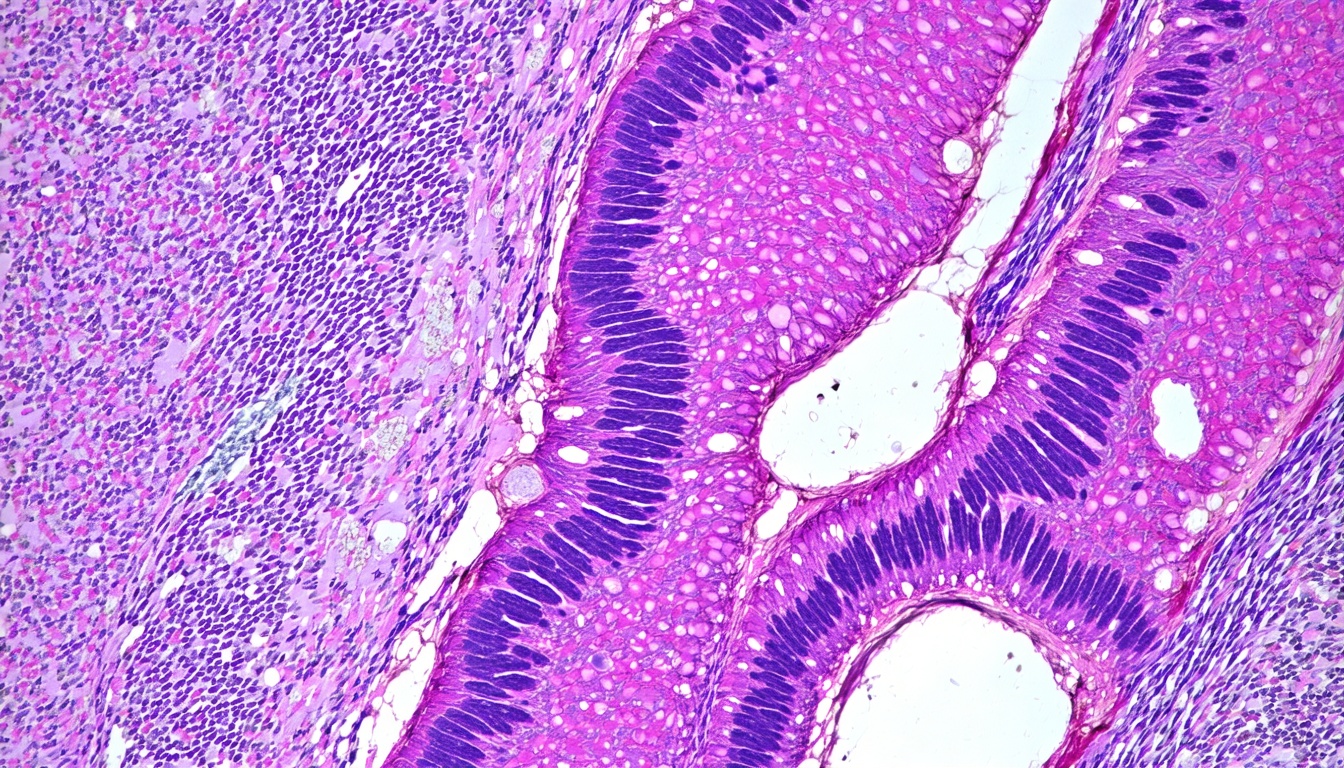
Introduction to Deep Learning in Pathology
The Intersection of AI and Pathology
Deep learning represents a significant advancement in artificial intelligence (AI) and has found a crucial role in the field of pathology. By leveraging complex algorithms and large datasets, deep learning enables the analysis of medical images with remarkable accuracy. This intersection of AI and pathology is transforming how healthcare professionals diagnose and treat diseases.
Pathologists traditionally relied on manual examination of tissue samples and images, a process that can be time-consuming and subject to human error. With the integration of deep learning, automated systems can assist in identifying patterns and anomalies in pathology images, enhancing diagnostic capabilities. This technology not only improves efficiency but also supports pathologists in making more informed decisions.
Importance of Deep Learning in Medical Imaging
The significance of deep learning in medical imaging cannot be overstated. It enhances the ability to detect diseases at earlier stages, which is critical for effective treatment. The following table illustrates the impact of deep learning on various aspects of medical imaging in pathology.
| Aspect | Traditional Methods | Deep Learning Methods |
|---|---|---|
| Diagnostic Accuracy | Moderate | High |
| Time Required for Analysis | Hours to Days | Minutes to Hours |
| Human Error Rate | Higher | Lower |
| Scalability | Limited | High |
Deep learning algorithms can analyze vast amounts of data quickly, making them invaluable in high-volume settings. For instance, in cancer diagnosis, AI systems can assist in identifying malignant cells with greater precision, as detailed in our article on ai in cancer diagnosis.
Moreover, the use of deep learning in pathology image analysis software is revolutionizing the field. These tools can automate routine tasks, allowing pathologists to focus on more complex cases. For more information on this technology, refer to our article on pathology image analysis software.
The integration of deep learning into pathology not only streamlines workflows but also enhances the overall quality of patient care. As the technology continues to evolve, its applications in automated pathology diagnosis and ai-enhanced pathology workflows will likely expand, further solidifying its role in modern healthcare.
Applications of Deep Learning in Pathology
Deep learning has transformed various aspects of pathology, enhancing the capabilities of medical professionals and improving patient outcomes. This section explores three key applications of deep learning in pathology: automated image analysis, disease detection and classification, and treatment planning and prognosis.
Automated Image Analysis
Automated image analysis utilizes deep learning algorithms to process and analyze medical images. This technology significantly reduces the time required for pathologists to review slides and identify abnormalities. By employing convolutional neural networks (CNNs), automated systems can detect features in images that may be missed by the human eye.
The following table illustrates the efficiency gains achieved through automated image analysis:
| Metric | Traditional Analysis | Automated Analysis |
|---|---|---|
| Average Review Time (minutes) | 30 | 5 |
| Accuracy (%) | 85 | 95 |
| Number of Samples Processed per Hour | 10 | 60 |
For more information on the software used in this process, refer to our article on pathology image analysis software.
Disease Detection and Classification
Deep learning models excel in disease detection and classification, enabling early diagnosis and treatment. These models are trained on large datasets of annotated images, allowing them to learn patterns associated with various diseases. For instance, deep learning has shown promise in identifying cancerous cells in histopathology slides.
The following table summarizes the performance of deep learning models in disease detection:
| Disease Type | Sensitivity (%) | Specificity (%) | Accuracy (%) |
|---|---|---|---|
| Breast Cancer | 92 | 90 | 91 |
| Lung Cancer | 88 | 85 | 87 |
| Melanoma | 95 | 93 | 94 |
For further insights into AI’s role in cancer diagnosis, visit our article on ai in cancer diagnosis.
Treatment Planning and Prognosis
Deep learning also plays a crucial role in treatment planning and prognosis. By analyzing patient data and imaging results, AI systems can assist healthcare providers in developing personalized treatment plans. These systems can predict patient outcomes based on historical data, helping clinicians make informed decisions.
The following table highlights the impact of deep learning on treatment planning:
| Metric | Traditional Methods | Deep Learning Methods |
|---|---|---|
| Time to Treatment Decision (days) | 14 | 3 |
| Patient Outcome Prediction Accuracy (%) | 75 | 90 |
| Treatment Plan Customization Rate (%) | 60 | 85 |
For more information on automated diagnosis in pathology, check out our article on automated pathology diagnosis.
Deep learning in pathology is revolutionizing the way diseases are detected, classified, and treated. By leveraging these advanced technologies, healthcare providers can enhance their workflows and improve patient care. For insights into how AI can enhance pathology workflows, refer to our article on ai-enhanced pathology workflows.
Deep Learning Techniques in Pathology
Deep learning has revolutionized the field of pathology by providing advanced techniques that enhance diagnostic accuracy and efficiency. This section explores three prominent deep learning techniques used in pathology: Convolutional Neural Networks (CNNs), Recurrent Neural Networks (RNNs), and Generative Adversarial Networks (GANs).
Convolutional Neural Networks (CNNs)
Convolutional Neural Networks are a class of deep learning algorithms particularly effective for image analysis. CNNs are designed to automatically and adaptively learn spatial hierarchies of features from images. This makes them ideal for tasks such as identifying patterns in pathology images.
CNNs consist of multiple layers, including convolutional layers, pooling layers, and fully connected layers. Each layer extracts different features from the input images, allowing the network to learn complex representations. The ability of CNNs to process large volumes of image data efficiently has made them a cornerstone in automated pathology diagnosis.
| Feature | Description |
|---|---|
| Input | Raw image data |
| Convolutional Layers | Extract features using filters |
| Pooling Layers | Reduce dimensionality |
| Fully Connected Layers | Classify the features |
Recurrent Neural Networks (RNNs)
Recurrent Neural Networks are designed to handle sequential data, making them suitable for tasks that involve time-series data or sequences. In pathology, RNNs can be applied to analyze temporal changes in medical images, such as monitoring disease progression over time.
RNNs utilize feedback loops to maintain information from previous inputs, allowing them to capture temporal dependencies. This capability is particularly useful in scenarios where understanding the sequence of events is crucial for diagnosis and treatment planning. RNNs can complement CNNs in applications that require both spatial and temporal analysis.
| Feature | Description |
|---|---|
| Input | Sequential data (e.g., time-series images) |
| Hidden States | Maintain information from previous inputs |
| Output | Predictions based on sequences |
Generative Adversarial Networks (GANs)
Generative Adversarial Networks are a unique class of deep learning models that consist of two neural networks: a generator and a discriminator. The generator creates synthetic data, while the discriminator evaluates the authenticity of the generated data. This adversarial process allows GANs to produce high-quality images that can be used for training other models.
In pathology, GANs can be employed to augment training datasets by generating realistic pathology images. This is particularly beneficial in scenarios where obtaining labeled data is challenging. By enhancing the diversity of training data, GANs contribute to improved model performance in tasks such as pathology image analysis software.
| Feature | Description |
|---|---|
| Generator | Creates synthetic images |
| Discriminator | Evaluates authenticity |
| Application | Data augmentation for training |
These deep learning techniques play a vital role in advancing the capabilities of AI in pathology. By leveraging CNNs, RNNs, and GANs, businesses can develop innovative solutions that enhance diagnostic processes and improve patient outcomes. For more insights on how AI is transforming cancer diagnosis, explore our article on ai in cancer diagnosis.
Challenges and Limitations
As deep learning continues to evolve in the field of pathology, several challenges and limitations must be addressed to ensure its effective implementation. These challenges include data quality and quantity, interpretability and explainability, and ethical and regulatory considerations.
Data Quality and Quantity
The success of deep learning models heavily relies on the availability of high-quality data. In pathology, this means having access to a large volume of annotated images that accurately represent various diseases and conditions. Insufficient or poor-quality data can lead to inaccurate models, which may result in misdiagnosis or ineffective treatment plans.
| Challenge | Description |
|---|---|
| Data Scarcity | Limited availability of annotated pathology images. |
| Data Variability | Differences in imaging techniques and sample preparation can affect model performance. |
| Annotation Quality | Inconsistent or inaccurate annotations can lead to model bias. |
To overcome these issues, businesses must invest in robust data collection and annotation processes. Utilizing pathology image analysis software can help streamline this process and improve data quality.
Interpretability and Explainability
Deep learning models, particularly complex ones like neural networks, often operate as “black boxes.” This means that understanding how they arrive at specific decisions can be challenging. In the context of pathology, this lack of transparency can hinder trust among healthcare professionals and patients.
| Challenge | Description |
|---|---|
| Black Box Nature | Difficulty in understanding model decision-making processes. |
| Trust Issues | Healthcare professionals may hesitate to rely on AI-driven diagnoses without clear explanations. |
| Regulatory Hurdles | Lack of interpretability can complicate compliance with healthcare regulations. |
To address these concerns, researchers are exploring methods to enhance the interpretability of deep learning models. This includes developing techniques that provide insights into model predictions, which can help build trust in AI solutions for automated pathology diagnosis.
Ethical and Regulatory Considerations
The integration of deep learning in pathology raises several ethical and regulatory questions. Issues such as data privacy, informed consent, and potential biases in AI algorithms must be carefully considered.
| Challenge | Description |
|---|---|
| Data Privacy | Ensuring patient data is protected and used ethically. |
| Informed Consent | Patients must be aware of how their data is used in AI training. |
| Algorithmic Bias | AI models may inadvertently perpetuate existing biases in healthcare. |
Businesses developing AI healthcare solutions must navigate these ethical and regulatory landscapes to ensure compliance and maintain public trust. Engaging with stakeholders and adhering to guidelines can help mitigate these risks while enhancing ai-enhanced pathology workflows.
Future Trends in Deep Learning for Pathology
The landscape of deep learning in pathology is rapidly evolving, with several promising trends on the horizon. These advancements are set to enhance diagnostic capabilities and improve patient outcomes.
Integration with Electronic Health Records
The integration of deep learning technologies with Electronic Health Records (EHR) is a significant trend. By combining imaging data with patient history, lab results, and treatment plans, healthcare providers can achieve a more comprehensive view of a patient’s health. This holistic approach allows for better-informed decision-making and personalized treatment strategies.
| Benefit of Integration | Description |
|---|---|
| Enhanced Data Accessibility | Streamlines access to patient information for healthcare professionals. |
| Improved Diagnostic Accuracy | Combines imaging analysis with clinical data for more accurate diagnoses. |
| Facilitated Research | Enables large-scale studies by aggregating diverse data sources. |
Personalized Medicine and Precision Diagnosis
Deep learning is paving the way for personalized medicine in pathology. By analyzing vast amounts of data, AI can identify specific biomarkers and genetic information that influence disease progression and treatment response. This capability allows for tailored treatment plans that cater to individual patient needs, improving overall effectiveness.
| Aspect of Personalized Medicine | Description |
|---|---|
| Targeted Therapies | Develops treatments based on individual genetic profiles. |
| Predictive Analytics | Uses historical data to forecast disease outcomes and treatment responses. |
| Customized Monitoring | Adjusts treatment plans based on real-time patient data. |
Advancements in AI Hardware and Software
The continuous improvement of AI hardware and software is crucial for the advancement of deep learning in pathology. Enhanced computational power and sophisticated algorithms enable faster processing of complex imaging data. These advancements lead to more efficient workflows and quicker diagnostic results.
| Technology Advancements | Impact |
|---|---|
| Improved GPUs | Accelerates image processing and analysis. |
| Advanced Algorithms | Increases accuracy and efficiency in disease detection. |
| Cloud Computing | Facilitates collaboration and data sharing among healthcare providers. |
These future trends in deep learning for pathology highlight the potential for significant improvements in diagnostic processes and patient care. As businesses look to build AI healthcare solutions, understanding these developments will be essential for leveraging the full capabilities of deep learning in pathology. For more insights on related topics, explore our articles on ai in cancer diagnosis and automated pathology diagnosis.
Impact of Deep Learning on Healthcare
Deep learning is transforming the landscape of healthcare, particularly in the field of pathology. Its applications are enhancing diagnostic processes, improving efficiency, and shaping the future of medical practices.
Improving Diagnostic Accuracy
Deep learning algorithms have shown significant promise in improving diagnostic accuracy in pathology. By analyzing vast amounts of medical imaging data, these algorithms can identify patterns and anomalies that may be missed by the human eye. This capability is particularly beneficial in areas such as cancer diagnosis, where early detection is crucial.
| Diagnostic Method | Traditional Accuracy (%) | Deep Learning Accuracy (%) |
|---|---|---|
| Breast Cancer Detection | 85 | 95 |
| Lung Cancer Detection | 80 | 92 |
| Melanoma Classification | 88 | 97 |
The table above illustrates the improvements in accuracy achieved through the implementation of deep learning techniques in various diagnostic methods. For more insights on this topic, refer to our article on ai in cancer diagnosis.
Enhancing Workflow Efficiency
The integration of deep learning in pathology also enhances workflow efficiency. Automated image analysis reduces the time pathologists spend on manual evaluations, allowing them to focus on more complex cases. This efficiency not only speeds up the diagnostic process but also helps in managing larger volumes of cases.
| Workflow Aspect | Traditional Time (Hours) | AI-Enhanced Time (Hours) |
|---|---|---|
| Image Analysis | 2 | 0.5 |
| Report Generation | 1 | 0.3 |
| Case Review | 3 | 1 |
The table above highlights the time savings achieved through AI-enhanced pathology workflows. For further details on this subject, explore our article on ai-enhanced pathology workflows.
Shaping the Future of Pathology
The future of pathology is being shaped by the advancements in deep learning technologies. As these tools become more sophisticated, they will enable personalized medicine and precision diagnosis, tailoring treatment plans to individual patient needs. The ongoing development of pathology image analysis software will further enhance the capabilities of healthcare professionals.
The potential for automated pathology diagnosis is vast, paving the way for more accurate and efficient healthcare solutions. For more information on this topic, visit our article on automated pathology diagnosis.
Deep learning in pathology is not just a trend; it is a fundamental shift in how healthcare providers approach diagnostics and patient care. The impact of these technologies will continue to grow, leading to improved outcomes and a more efficient healthcare system.
Want to grow your business online with smarter strategies? Kara Digital offers data-driven digital marketing services and powerful AI solutions to help you scale faster and more efficiently. Let’s turn your vision into measurable success.