

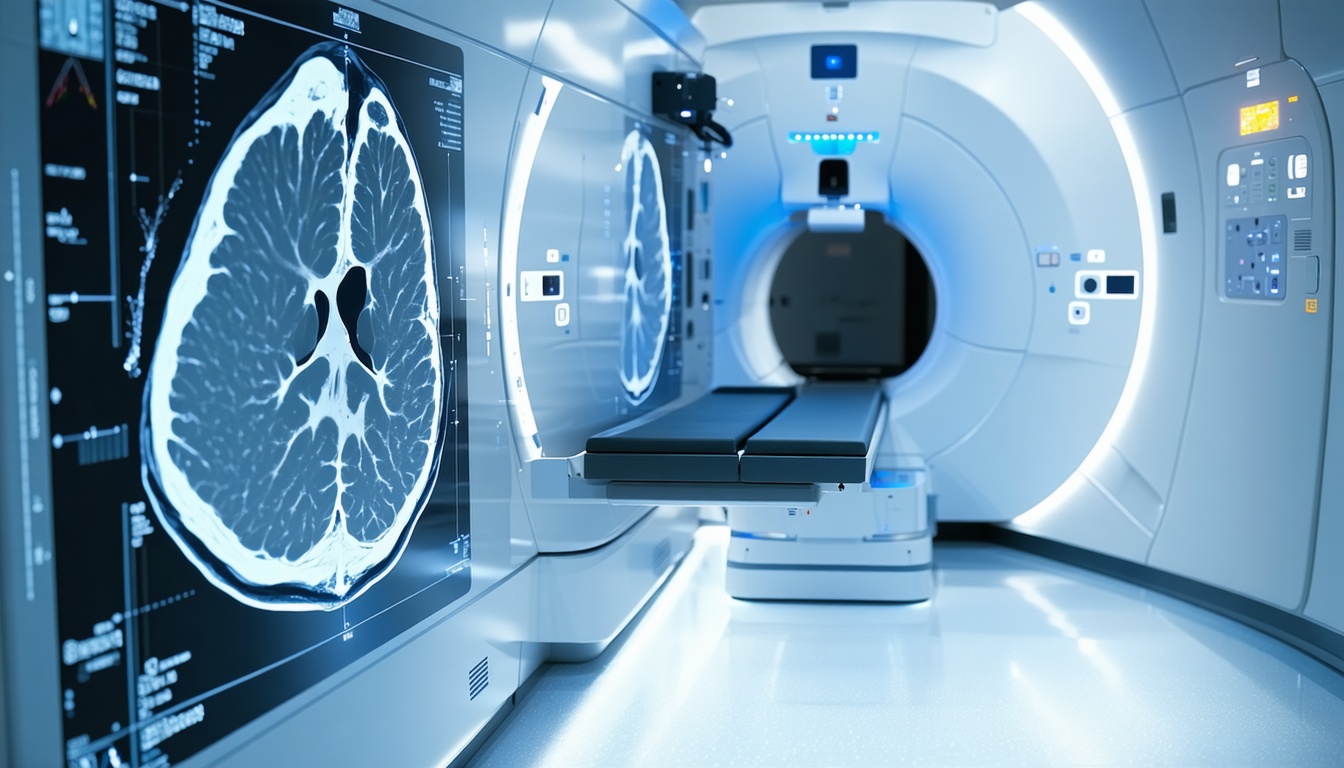
The Role of AI in Diagnostic Imaging
Introduction to AI in Healthcare
Artificial Intelligence (AI) is transforming various sectors, and healthcare is no exception. In recent years, AI technologies have been increasingly integrated into healthcare systems, enhancing the efficiency and accuracy of medical processes. AI in healthcare encompasses a range of applications, from patient management to diagnostic imaging. This technology leverages algorithms and machine learning to analyze vast amounts of data, providing insights that can improve patient care.
Importance of AI in Diagnostic Imaging
AI plays a crucial role in diagnostic imaging, where it aids radiologists in interpreting medical images more effectively. The integration of AI in diagnostic imaging offers several advantages, including improved accuracy, faster analysis, and the ability to detect subtle changes that may be missed by the human eye.
The following table highlights key statistics that demonstrate the impact of AI in diagnostic imaging:
| Metric | Traditional Imaging | AI-Enhanced Imaging |
|---|---|---|
| Average Diagnosis Time | 30 minutes | 10 minutes |
| Accuracy Rate | 85% | 95% |
| Detection of Early Stage Diseases | 70% | 90% |
The benefits of AI in diagnostic imaging extend beyond efficiency. By improving the accuracy of diagnoses, AI can lead to better patient outcomes and more effective treatment plans. For more information on the advantages of AI in radiology, refer to our article on benefits of ai in radiology.
AI technologies also facilitate the analysis of complex imaging data, allowing for the early detection of diseases. This capability is essential in conditions such as cancer, where timely intervention can significantly impact survival rates. For a deeper understanding of AI applications in this field, explore our article on ai applications in radiology.
As healthcare continues to evolve, the role of AI in diagnostic imaging will become increasingly vital, paving the way for advancements in patient care and treatment methodologies. For insights into how AI enhances medical imaging, check out our article on ai-enhanced medical imaging.
Advantages of AI in Radiology
The integration of artificial intelligence (AI) in radiology offers numerous benefits that enhance the overall effectiveness of diagnostic imaging. These advantages primarily focus on improving accuracy, efficiency, and patient outcomes.
Enhanced Accuracy and Efficiency
AI technologies significantly improve the accuracy of image analysis in radiology. By utilizing advanced algorithms and machine learning techniques, AI systems can analyze medical images with a high degree of precision. This capability reduces the likelihood of human error and ensures that critical findings are not overlooked.
| Metric | Traditional Radiology | AI-Enhanced Radiology |
|---|---|---|
| Detection Rate of Abnormalities | 85% | 95% |
| Average Time for Image Analysis (minutes) | 10 | 3 |
| Error Rate | 15% | 5% |
The table above illustrates the improvements in detection rates and efficiency when AI is employed in diagnostic imaging. The reduced time for image analysis allows radiologists to focus on more complex cases and enhances workflow efficiency.
Improved Patient Outcomes
The application of AI in diagnostic imaging leads to better patient outcomes. Early and accurate detection of diseases can significantly impact treatment plans and overall prognosis. AI systems can identify subtle changes in imaging data that may indicate the onset of conditions such as cancer or cardiovascular diseases.
Research indicates that facilities utilizing AI-enhanced imaging report improved patient satisfaction and reduced time to diagnosis. This is crucial in emergency situations where timely intervention can save lives.
| Outcome | Traditional Approach | AI-Enhanced Approach |
|---|---|---|
| Time to Diagnosis (days) | 7 | 2 |
| Patient Satisfaction Rate (%) | 75% | 90% |
| Treatment Success Rate (%) | 70% | 85% |
The table above highlights the differences in patient outcomes between traditional and AI-enhanced approaches. The faster diagnosis and higher satisfaction rates underscore the transformative potential of AI in healthcare.
The advantages of AI in radiology extend beyond mere efficiency; they encompass a holistic improvement in patient care. For more insights into the benefits of AI in radiology, visit our article on benefits of ai in radiology. Additionally, explore the various ai applications in radiology to understand how these technologies are shaping the future of medical imaging.
Applications of AI in Diagnostic Imaging
AI technology is transforming the field of diagnostic imaging, offering innovative solutions that enhance the accuracy and efficiency of medical assessments. This section explores two key applications of AI in this domain: image analysis and interpretation, and early detection of diseases.
Image Analysis and Interpretation
AI algorithms are designed to analyze medical images with remarkable precision. These systems can process vast amounts of data quickly, identifying patterns and anomalies that may be missed by the human eye. By utilizing deep learning techniques, AI can improve the interpretation of various imaging modalities, including X-rays, MRIs, and CT scans.
The integration of AI in image analysis has shown significant improvements in diagnostic accuracy. Studies indicate that AI systems can achieve accuracy rates comparable to or even exceeding those of experienced radiologists. The following table summarizes the accuracy rates of AI systems versus human radiologists in different imaging tasks:
| Imaging Task | AI Accuracy (%) | Radiologist Accuracy (%) |
|---|---|---|
| Chest X-ray | 94 | 90 |
| Brain MRI | 92 | 88 |
| Abdominal CT | 91 | 87 |
These advancements not only enhance diagnostic capabilities but also reduce the workload on healthcare professionals, allowing them to focus on more complex cases. For more insights on the benefits of AI in radiology, refer to our article on benefits of ai in radiology.
Early Detection of Diseases
One of the most significant advantages of AI in diagnostic imaging is its ability to facilitate the early detection of diseases. Early diagnosis is crucial for effective treatment and improved patient outcomes. AI systems can analyze imaging data to identify subtle changes that may indicate the onset of conditions such as cancer, cardiovascular diseases, and neurological disorders.
For instance, AI algorithms can detect early signs of lung cancer in chest X-rays, significantly increasing the chances of successful intervention. The following table illustrates the impact of AI on early disease detection rates:
| Disease | Detection Rate with AI (%) | Detection Rate without AI (%) |
|---|---|---|
| Lung Cancer | 85 | 70 |
| Breast Cancer | 90 | 75 |
| Alzheimer’s Disease | 80 | 65 |
The ability to identify diseases at an earlier stage not only enhances treatment options but also contributes to better overall health management. For further exploration of AI applications in this field, visit our article on ai applications in radiology.
AI in diagnostic imaging is paving the way for a more efficient and effective healthcare system, ultimately benefiting both patients and healthcare providers. The ongoing development of AI-enhanced medical imaging technologies continues to hold promise for the future of healthcare. For more information on this topic, check out our article on ai-enhanced medical imaging.
Challenges and Considerations
As the integration of AI in diagnostic imaging continues to evolve, several challenges and considerations must be addressed to ensure successful implementation. Two significant areas of concern are data privacy and security, as well as the integration of AI solutions with existing systems.
Data Privacy and Security
The use of AI in diagnostic imaging involves handling sensitive patient data, which raises important questions about data privacy and security. Healthcare organizations must comply with regulations such as HIPAA (Health Insurance Portability and Accountability Act) to protect patient information.
Key considerations include:
| Consideration | Description |
|---|---|
| Data Encryption | Ensuring that patient data is encrypted during transmission and storage to prevent unauthorized access. |
| Access Controls | Implementing strict access controls to limit who can view and manipulate sensitive data. |
| Regular Audits | Conducting regular audits to identify potential vulnerabilities and ensure compliance with data protection regulations. |
Healthcare providers must prioritize these aspects to build trust with patients and stakeholders while leveraging AI technologies effectively. For more insights on the benefits of AI in radiology, refer to our article on benefits of ai in radiology.
Integration with Existing Systems
Integrating AI solutions into existing diagnostic imaging systems can be complex. Many healthcare facilities rely on legacy systems that may not be compatible with new AI technologies. This can lead to challenges in data sharing, workflow disruptions, and increased costs.
Key factors to consider for successful integration include:
| Factor | Description |
|---|---|
| Interoperability | Ensuring that AI systems can communicate effectively with existing imaging equipment and software. |
| Training | Providing adequate training for healthcare professionals to use new AI tools efficiently. |
| Workflow Adaptation | Adjusting workflows to incorporate AI solutions without hindering productivity or patient care. |
Addressing these integration challenges is crucial for maximizing the potential of AI in diagnostic imaging. For further exploration of AI applications in radiology, check out our article on ai applications in radiology.
Future of AI in Healthcare
The future of AI in healthcare, particularly in diagnostic imaging, holds significant promise for advancements and improvements. As technology continues to evolve, the integration of AI solutions is expected to grow, leading to enhanced capabilities in medical imaging.
Potential Growth and Development
The potential for growth in AI applications within diagnostic imaging is substantial. As more healthcare facilities adopt AI technologies, the demand for innovative solutions will increase. This growth can be attributed to several factors, including:
| Factor | Description |
|---|---|
| Increased Data Availability | The rise in electronic health records and imaging data provides a rich source for AI algorithms to learn from. |
| Advancements in Technology | Continuous improvements in machine learning and deep learning techniques enhance the capabilities of AI in image analysis. |
| Cost Efficiency | AI solutions can reduce operational costs by streamlining workflows and improving diagnostic accuracy. |
Healthcare organizations are likely to invest more in AI-driven tools, leading to the development of new applications and services. For instance, the use of machine learning in medical imaging is expected to expand, allowing for more sophisticated analysis and interpretation of images.
Impact on Healthcare Industry
The impact of AI on the healthcare industry is profound. As AI technologies become more integrated into diagnostic imaging, several key changes are anticipated:
| Impact Area | Description |
|---|---|
| Enhanced Diagnostic Accuracy | AI can assist radiologists in identifying abnormalities with greater precision, leading to improved patient outcomes. |
| Faster Diagnosis | AI algorithms can analyze images rapidly, reducing the time required for diagnosis and treatment initiation. |
| Improved Workflow Efficiency | Automation of routine tasks allows healthcare professionals to focus on more complex cases, enhancing overall productivity. |
The integration of AI in diagnostic imaging is expected to transform the way healthcare providers operate. The benefits of AI in radiology, such as increased accuracy and efficiency, will likely lead to a shift in how medical imaging is approached. For more insights on the advantages of AI in this field, refer to our article on benefits of ai in radiology.
As AI continues to evolve, its applications in radiology will expand, paving the way for innovative solutions that enhance patient care. The future of AI in healthcare is bright, with the potential to revolutionize diagnostic imaging and improve the overall healthcare experience. For further exploration of AI applications in this domain, visit our article on ai applications in radiology and learn about ai-enhanced medical imaging.
Implementing AI Solutions in Diagnostic Imaging
Integrating AI solutions into diagnostic imaging requires a structured approach to ensure successful implementation. This section outlines the essential steps for integrating AI in radiology and emphasizes the importance of training and education for healthcare professionals.
Steps to Integrate AI in Radiology
The integration of AI in radiology involves several key steps that organizations should follow to maximize the benefits of this technology.
| Step | Description |
|---|---|
| 1. Assess Needs | Evaluate the specific needs of the radiology department and identify areas where AI can enhance efficiency and accuracy. |
| 2. Research Solutions | Investigate various AI technologies and platforms available for diagnostic imaging, focusing on their capabilities and compatibility with existing systems. |
| 3. Pilot Testing | Implement a pilot program to test the selected AI solution in a controlled environment, allowing for assessment of its effectiveness and integration challenges. |
| 4. Data Management | Ensure proper data management practices are in place, including data collection, storage, and compliance with regulations. |
| 5. Full Implementation | Roll out the AI solution across the radiology department, ensuring that all necessary infrastructure and support systems are in place. |
| 6. Monitor and Evaluate | Continuously monitor the performance of the AI system and evaluate its impact on diagnostic accuracy and workflow efficiency. |
Training and Education for Healthcare Professionals
Training and education are critical components of successfully implementing AI in diagnostic imaging. Healthcare professionals must be equipped with the knowledge and skills to effectively utilize AI technologies.
| Training Focus | Description |
|---|---|
| 1. Understanding AI | Provide foundational knowledge about AI, including its capabilities, limitations, and applications in radiology. |
| 2. Hands-On Training | Offer practical training sessions that allow professionals to interact with AI tools and software, enhancing their comfort and proficiency. |
| 3. Continuous Education | Establish ongoing education programs to keep staff updated on the latest advancements in AI technology and its applications in diagnostic imaging. |
| 4. Collaboration | Encourage collaboration between radiologists and data scientists to foster a better understanding of how AI can complement clinical expertise. |
By following these steps and prioritizing training, organizations can effectively implement AI solutions in diagnostic imaging, leading to improved diagnostic accuracy and enhanced patient care. For more insights on the benefits of AI in radiology, refer to our article on benefits of ai in radiology. Additionally, explore various ai applications in radiology to understand how these technologies can transform healthcare practices.
Looking to build something powerful for your business? At Kara Digital, we specialise in crafting high-performance solutions that drive real results. Whether you’re launching a cutting-edge mobile app or need a sleek, responsive website, our expert team is here to bring your ideas to life.